Why Healthcare Procurement Software Has Been Too Expensive for Too Long
For years, healthcare procurement software has been built for the largest organizations in the market.
That made sense for the companies selling it. Large health systems had the budgets, the teams, and the patience to support long implementations, complex workflows, and expensive contracts.
But it left everyone else behind.
Independent practices, specialty groups, surgery centers, and growing multi-location organizations were often forced to choose between two bad options: keep managing purchasing manually, or adopt a system that was too expensive, too complicated, and too slow to implement.
We believe that model is outdated.
Legacy systems were built for a different era
Many procurement platforms in healthcare were built 10, 15, or even 20 years ago. At the time, they may have been impressive. But software has changed dramatically since then.
Today, users expect technology to be intuitive, fast, and easy to adopt. They expect clean interfaces, automation, and real-time visibility. They do not expect months of setup, complicated training, or workflows that feel like they were designed for a different generation of software.
Unfortunately, much of the healthcare procurement market still operates on legacy infrastructure.
Older systems often come with high operating costs, large support teams, manual data processes, and complex implementation requirements. When the cost to operate a platform is high, the customer ultimately pays for it.
That is one reason procurement software has remained so expensive.
The implementation burden became part of the price
Traditional procurement platforms often require a heavy lift before a customer can even begin using the system.
There may be supplier data to collect, pricing files to configure, item catalogs to organize, purchasing rules to set up, approval workflows to map, and users to train. For many organizations, implementation can take weeks or months before the platform delivers meaningful value.
That timeline creates cost for everyone involved.
The software provider needs implementation staff. The customer needs internal coordination. Distributor representatives may be asked to provide data, validate pricing, or support setup. The entire process becomes slower, more expensive, and harder to scale.
The result is a platform that may eventually work, but only after a long and costly onboarding process.
For smaller and mid-sized healthcare organizations, that model simply does not fit.
Expensive software often creates more work
The promise of procurement software is simple: make purchasing easier.
But many legacy platforms do the opposite.
They require training. They require process changes. They require users to learn unfamiliar workflows. They often feel disconnected from how healthcare teams actually buy supplies.
That creates a real problem.
If software is too difficult to use, adoption suffers. If adoption suffers, the organization never gets full visibility. If visibility is incomplete, leadership still does not have the data needed to manage spend effectively.
In other words, expensive procurement software can still fail to solve the core problem.
Healthcare organizations do not need more complexity. They need simpler ways to order, track, manage, and understand purchasing activity.
Modern technology changes the equation
Procurement software no longer needs to be slow, expensive, or difficult to use.
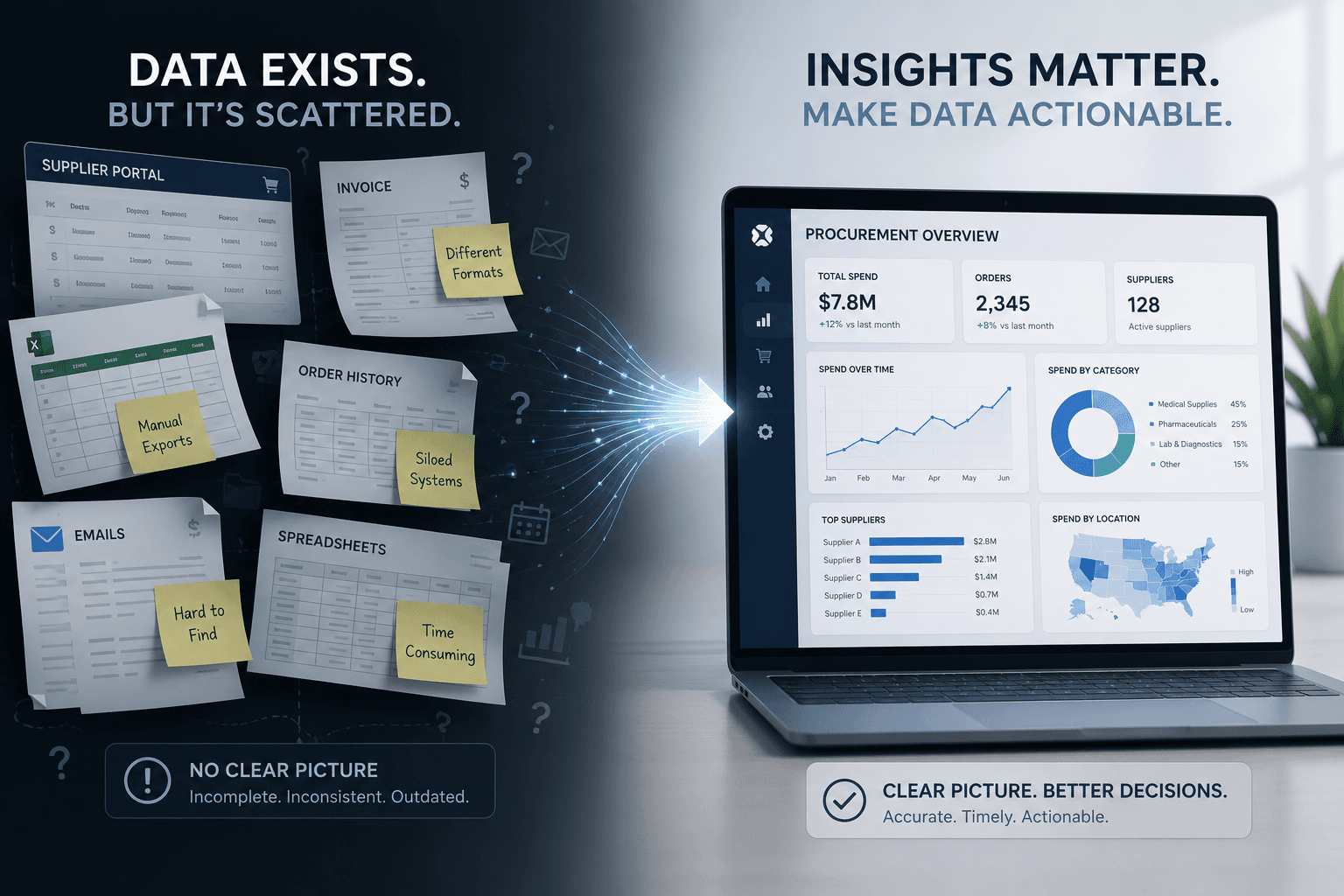
Modern platforms can automate more of the work that used to require manual setup. They can create cleaner user experiences, reduce implementation timelines, and give teams visibility without requiring months of configuration.
That matters because the market has changed.
Healthcare organizations of every size now need better purchasing tools. Not just enterprise health systems. Not just the top 1% of buyers. Every practice needs to understand what it is buying, where it is buying from, and how purchasing decisions affect the business.
Modern procurement technology should be accessible to all of them.
Enterprise capability should not require enterprise pricing
At Wren, we believe healthcare organizations should not need enterprise budgets to access enterprise-level purchasing tools.
The industry has accepted expensive, complicated procurement software for too long because there were not better options. But modern technology makes a different model possible.
A platform can be powerful and affordable.
It can support serious purchasing workflows without requiring months of implementation.
It can give organizations visibility into spending without forcing users through complicated processes.
It can help teams purchase from the suppliers they already use instead of asking them to change everything about how they operate.
That is the future we are building toward.
Healthcare procurement should be simpler
Healthcare purchasing is already complicated enough.
Organizations manage multiple suppliers, changing prices, inventory needs, approvals, invoices, and location-specific requirements. The software meant to help should not add another layer of complexity.
It should remove it.
Wren was built around a simple belief: every healthcare organization deserves access to modern procurement software at a reasonable price.
Not just the largest systems.
Not just the organizations with massive purchasing departments.
Every healthcare organization.
Because better purchasing tools should not be reserved for the few. They should be available to the practices, clinics, centers, and healthcare teams doing the work every day.