Healthcare procurement has changed remarkably little over the past two decades.
Organizations still manage multiple supplier relationships.
Teams still rely on spreadsheets.
Reports are still assembled manually.
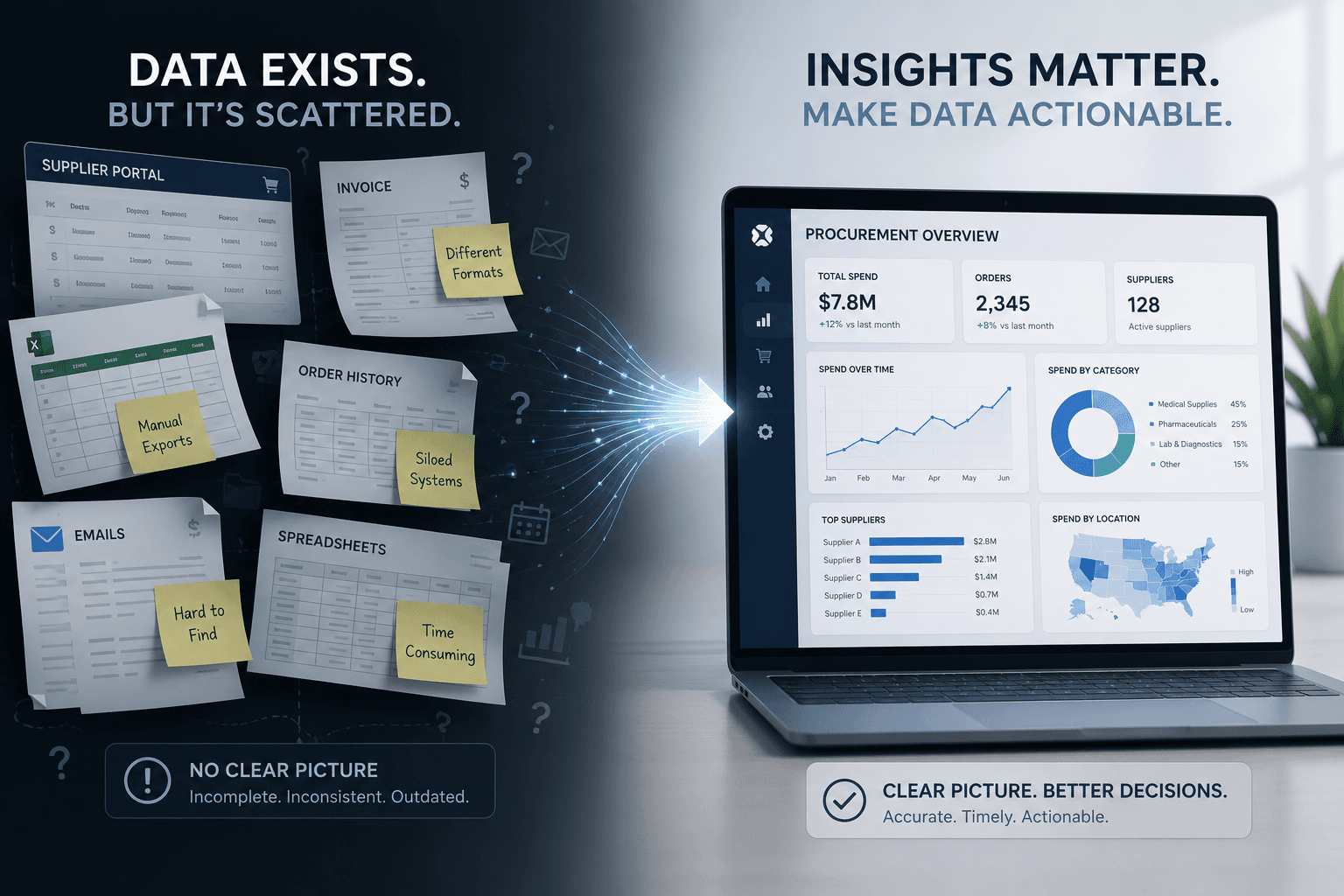
Critical purchasing data remains scattered across systems.
While healthcare itself has embraced innovation, procurement has often been left behind.
That is beginning to change.
Visibility is becoming more important than transactions
Historically, procurement software focused on helping organizations complete transactions.
Place an order.
Approve a purchase.
Track a shipment.
Those functions remain important, but they are no longer enough.
Healthcare organizations increasingly need visibility into what is happening across their entire purchasing operation.
They want to understand spending patterns.
They want to compare locations.
They want to identify opportunities to improve efficiency.
The future of procurement is not just about buying products.
It is about understanding purchasing behavior.
Data will become a competitive advantage
Every purchase tells a story.
What products are being ordered?
Which categories are growing?
Which locations are spending more?
How are supplier relationships evolving?
Organizations that can answer these questions will make better decisions.
Organizations that cannot will continue relying on assumptions.
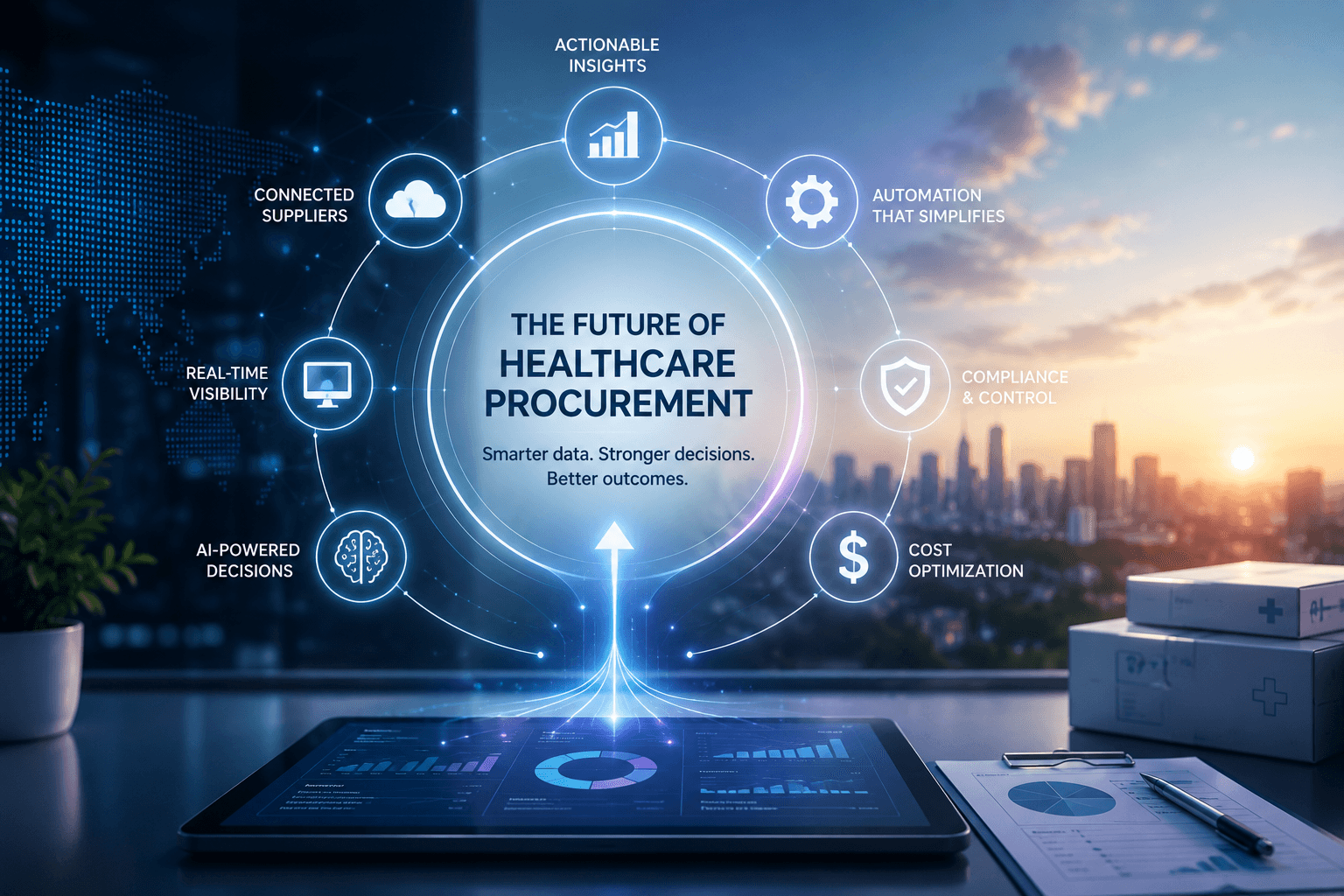
The next generation of procurement platforms will help healthcare organizations transform purchasing data into actionable insights.
Simplicity will replace complexity
For years, procurement software became more complicated as vendors added features.
More screens.
More configuration.
More training.
More implementation.
The result was often software that required significant effort just to use effectively.
Modern technology allows organizations to take a different approach.
Powerful systems no longer need to be difficult.
The future belongs to platforms that combine sophisticated capabilities with intuitive user experiences.
Automation will eliminate repetitive work
Healthcare teams should spend their time making decisions, not assembling reports.
Technology can automate many of the repetitive tasks that currently consume administrative resources.
Data collection.
Reporting.
Monitoring.
Analysis.
As automation improves, procurement teams will spend less time gathering information and more time acting on it.
Procurement should be accessible to everyone
Perhaps the biggest shift ahead is accessibility.
Historically, advanced procurement technology was often reserved for the largest healthcare organizations.
Smaller practices and growing multi-location groups were frequently overlooked.
That model is changing.
Modern software can be deployed faster, maintained more efficiently, and delivered at a fraction of the historical cost.
As a result, organizations of every size can gain access to tools that were once available only to the largest enterprises.
The next decade of procurement
The future of healthcare procurement is not about replacing people.
It is about giving them better information.
Organizations will continue to rely on trusted suppliers.
Teams will continue to make purchasing decisions.
Leaders will continue to manage budgets and operations.
What changes is their ability to see, understand, and act on the data behind those decisions.
The organizations that embrace that future will not simply purchase more efficiently.
They will operate more intelligently.
And that is where healthcare procurement is headed.